“Here beginneth a treatise how the High Father of heaven sendeth Death to summon every creature to come and give account of their lives.” – Narrator, Everyman; Section 1 (Prologue)
Come October of each year, the world is treated to the announcement of a special set of awards. Such rituals are underway year-round, of course, and are a feature of every field of human endeavor. But each October’s Nobel Prizes have a unique brand recognition and reputation. That starts with the award categories:
Physics. Chemistry. Physiology/Medicine. Literature. Peace. Economics.[1]
Or – distilled to their essence – innovation for human benefit, whether that be in the sciences, or the arts, or the effort to bring about peace on a warring Earth. (The previous LOTRW post looked at one example in a bit more detail – this year’s Economics Prize.)
The prizes are a big deal. Nobelists are luminaries in their fields. Among their number over past years we find Albert Einstein (physics); Marie Curie (once for physics, again for chemistry); Linus Pauling (chemistry, again for peace); James Watson, Francis Crick, and Maurice Wilkins (physiology or medicine); Albert Camus (literature); Toni Morrison (literature); Nelson Mandela (peace); and Mother Teresa (peace); and many more, several of even greater stature. About 1000 honorees overall.
So the same must be true of Alfred Nobel himself, right? Surely he was a larger-than-life figure.
That’s certainly borne out by his resume. Wikipedia provides a crisp bio. A 19th-century Swede, he was a chemist, inventor, engineer, and businessman. He was born into poverty but died rich, amassing a fortune of more than 30 million Swedish kroner (which would be worth perhaps $200 million dollars today). He was clearly brilliant; he became fluent in half a dozen languages, was granted his first patent when he was only 24 years old. His most famous invention was dynamite, an explosive derived from nitroglycerin. (This patent would come ten years later.) He amassed 355 patents over his lifetime.
If we do the math, most of us will discover that this is 355 more patents than we can claim. Larger than life indeed.
But a closer look reveals a Nobel as a more human figure. About the time of Alfred’s birth in 1833, his father, Immanuel Nobel, was indeed bankrupt, but he moved to Finland and then Russia where he found success developing and building weaponry for the Russian military and other ventures. He would bring his family (wife and seven children) from Sweden to Russia in 1842. At the conclusion of the Crimean War, the business went into decline. Immanuel Nobel returned to Sweden in 1859, and established a nitroglycerin factory there. Alfred Nobel, who had been studying nitroglycerin chemistry all the while, simply went into the family business. In essence, like so many of us in our lives, he did no more than follow the path of least resistance. (As a scientist, the son of a scientist, I know a little about that glide path; perhaps you do as well.)
Nobel’s focus was on ways and means to make the handling of nitroglycerin safer. He pursued this work with added intensity after the Nobel factory explosion in 1864 that killed his brother Emil. His 1867 patent for dynamite was the result. Dynamite and the invention and manufacture of even more powerful explosives and detonation technology would make him rich.
There was one problem. Dynamite offered many civilian applications – in mining, and civil engineering tasks such as building railroads and canals, tunneling, etc. However, it was also quickly adopted for use in warfare – a weapon of mass destruction (WMD). Nobel is said to have thought that dynamite weaponry would be so devastating that it would mean the end of warfare – peace through deterrence[2]. Any such hope, if he ever held it, was short lived. Nobel knew all too well the source of his wealth.
How did that make him feel? A story (probably apocryphal) is that when another of Alfred’s brothers, Ludvig, died in 1888, some newspapers published obituaries of Alfred in error; one was headlined the merchant of death is dead. Alfred was supposedly appalled to realize this would be his legacy and established the Nobel prizes as a result. He had never married, and his will, signed in 1895, a year before he died, left virtually his entire fortune to this cause.
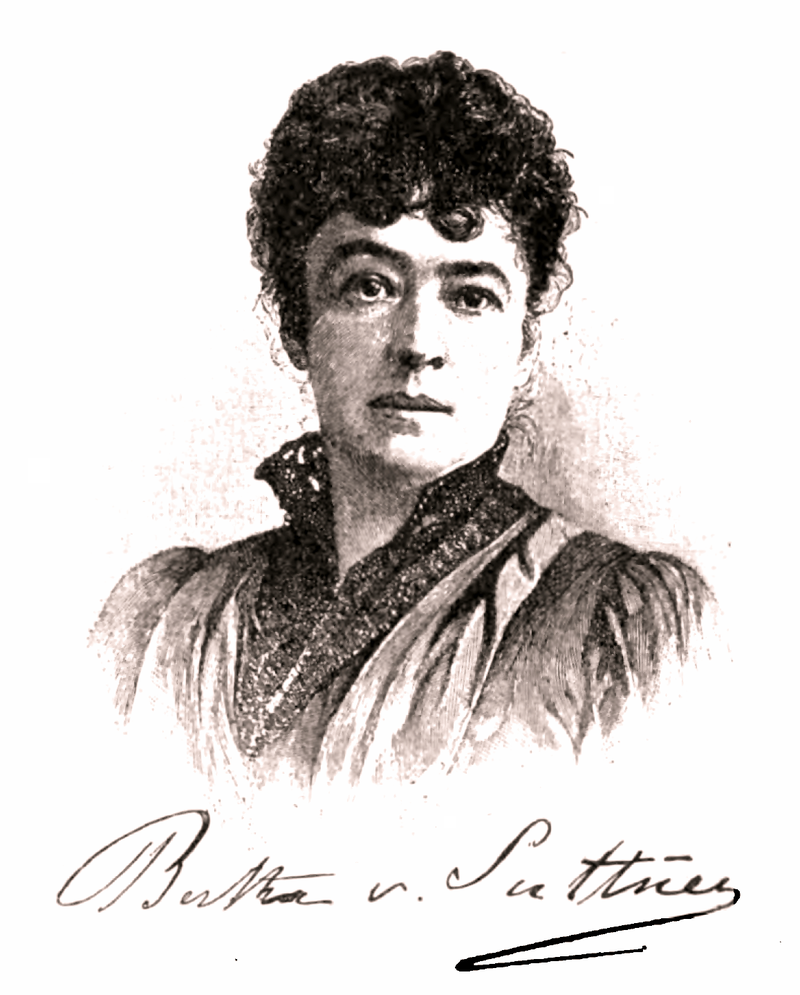
A more compelling narrative involves one of the only two women in his life, the Austro-Bohemian Countess Bertha von Suttner. Her checkered origins and life and its ups and downs are powerfully moving in their own right; if you’re someone who is constantly sampling the internet’s clickbait, you can do far worse than read her life story in this Wikipedia article. What an amazing person!
The Countess became Nobel’s housekeeper and secretary in 1876, but only briefly. However, she then corresponded with him throughout the rest of his life. A strong, visionary, and articulate pacifist, she’s credited with influencing Nobel’s decision to establish the Peace Prize in his eponymous stable of honors. In 1905 she herself would be awarded that Nobel Peace prize “for her sincere peace activities”, becoming only the second woman recipient of a Nobel Prize after Marie Curie.
Which brings us to that famous late 15th-century morality play, of uncertain origins, entitled The Summoning of Everyman. This play deals with the near universal sense of guilt we all experience when we look back over our lives (and how we can set ourselves free of that guilt). To emphasize, the guilt and regrets doesn’t stem so much from the standpoint of any external yardstick like the ten commandments, but more fundamentally – from our own judgment that we have fallen short of our potential. It’s only natural to flinch from such self-assessment. We didn’t all invent dynamite. But – the possibility that our life’s work and effort and much of its potential significance has either been misdirected or squandered – that is a thought that nags us all.
In light of this sobering reality, Nobel’s experience should give us cheer in several respects. First, and this might seem peculiar initially, the negative thoughts that nag us most greatly don’t come from the outside – even given the remarkable dysfunction, unfairness, and evil in the larger world. Our most painful negative thoughts come from awareness of our own shortcomings. This means they’re in our circle of influence. We can make some of those things right[3]. Second, it’s not so much a stricken conscience that guides you or me. Rather it’s more like a sensitized conscience. Our consciences don’t just push us away from the bad; they pull us toward the good. And if we each listen to our conscience, it can ennoble us, or even enNobel[4] us (as in make us more like Alfred Nobel), inspiring us to build positive legacies upon our life’s work for good[5]. And finally, many if not most of us (even the unmarried Alfred Nobel) have significant others in our lives. Often, if we let them in, listen to their encouragement, they can help us get in touch with the better angels of our nature.
A final thought experiment. We’re not all in a position to endow a prize. But if you could, what attributes, accomplishments, contributions, efforts, values would you choose to honor? Annually, you would award an Everyperson prize for…?
[1] The first four prizes have been awarded since 1901and are funded by the Nobel Foundation. This latter one was established separately, in 1968, and is funded by the Sweden’s central bank.
[2] Something similar has unfolded with respect to the invention of nuclear weapons, though the deterrence has the drama (and potential for catastrophe) of a geopolitical high-wire act.
[3] Recall Stephen Covey’s first habit of highly effective people: be proactive.
[4] Apologies. Couldn’t help myself. My conscience should have stopped me but didn’t.
[5] From Stephen Covey’s second habit: begin with the end in mind.
By Martin Maack – “Die Novelle” Ein kritisches Lexikon über die bekanntesten deutschen Dichter der Gegenwart mit besonderer Berücksichtigung der Novellisten, Public Domain, https://commons.wikimedia.org/w/index.php?curid=13286706